


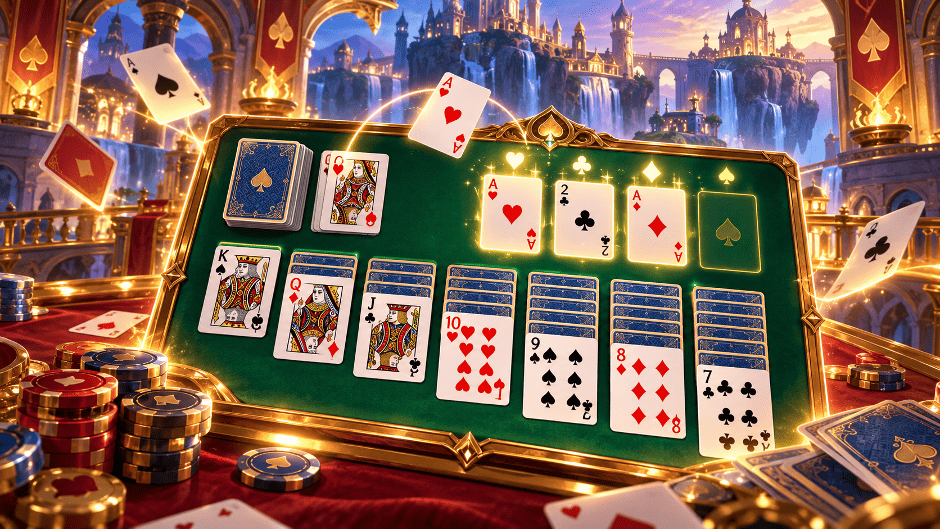
A classic card layout with fixed movement rules defines each round, where every decision affects the next available move. The Solitaire for money format adds a betting option to the traditional Klondike structure, allowing users to select a stake before starting a round on 1xBet for the Indian market. The objective is to separate all 52 cards into four suit piles, starting with aces and continuing up to kings in ascending order.
A new round opens with seven columns formed from 28 cards placed on the table. The first column starts with one card, and every following column receives an additional card compared with the previous one. Only the top cards are available for immediate moves, while the hidden cards require careful planning to reveal.
The main rules that define the card structure include:
- Column arrangement – сards in the table columns are arranged in descending order. A red card can only be placed on a black card with a greater value; the same rule applies in reverse.
- Card transfers – players can move single cards or complete groups between columns. The upper card of the destination sequence must have a higher value and opposite colour.
- Foundation piles – four separate piles are created by suit. Each pile starts with an ace and continues with cards from two through king.
- Empty spaces – a free column can only receive a king or a sequence beginning with a king.
- Stock cards – the remaining deck can be opened when additional cards are needed to continue building combinations.
- Final result – completing all four foundation piles leads to a successful round, with the bet paid according to the x2 multiplier.
The minimum stake is 20 INR, while the maximum amount reaches 11293.34 INR per round. Before the game begins, users choose the account balance type and confirm the wager. If no available move remains, the round can be ended by selecting the give-up option.
Planning Every Move Before the Final Card
Solitaire depends on careful card placement because an early decision can change the number of available actions later. Players who use money for Solitaire should focus on creating open columns and revealing hidden cards instead of moving cards only because a placement is possible. This approach is also useful for users from India accessing the game through 1xBet, as each round follows the same Klondike structure.
Revealing Hidden Cards Without Blocking Columns
Face-down cards should usually receive attention because every revealed card adds new possible combinations. However, opening a card is not always the only priority, since some moves can remove important positions from the table.
Keeping several columns active allows more flexibility during the round. Before transferring a sequence, it is useful to check if the move creates new options or limits future placements. A balanced layout gives more opportunities to build foundations later.
Choosing the Right Time for Foundation Moves
Moving cards to the foundation piles brings the round closer to completion, but timing matters. A card that looks suitable for a foundation may still be needed in a column to uncover hidden cards or create a longer sequence.
Aces and low-value cards often help start the foundation piles, while higher cards can remain on the table until they support other combinations. Checking the available columns before each foundation move helps maintain more possible actions. This approach keeps the layout flexible and supports better decisions during the later stages.
Managing the Stock Cards During Difficult Positions
The stock pile can provide important cards when the table does not offer enough moves. At the same time, using every available stock card immediately may create fewer choices in later stages of the round. Careful timing is useful because some stock cards can become valuable after other columns are reorganized.
Players should review the current layout before opening additional cards. A planned approach helps identify which stock cards can support column transfers and which cards should remain available for future combinations. Keeping track of the remaining cards also helps prepare for the final foundation placements.
